
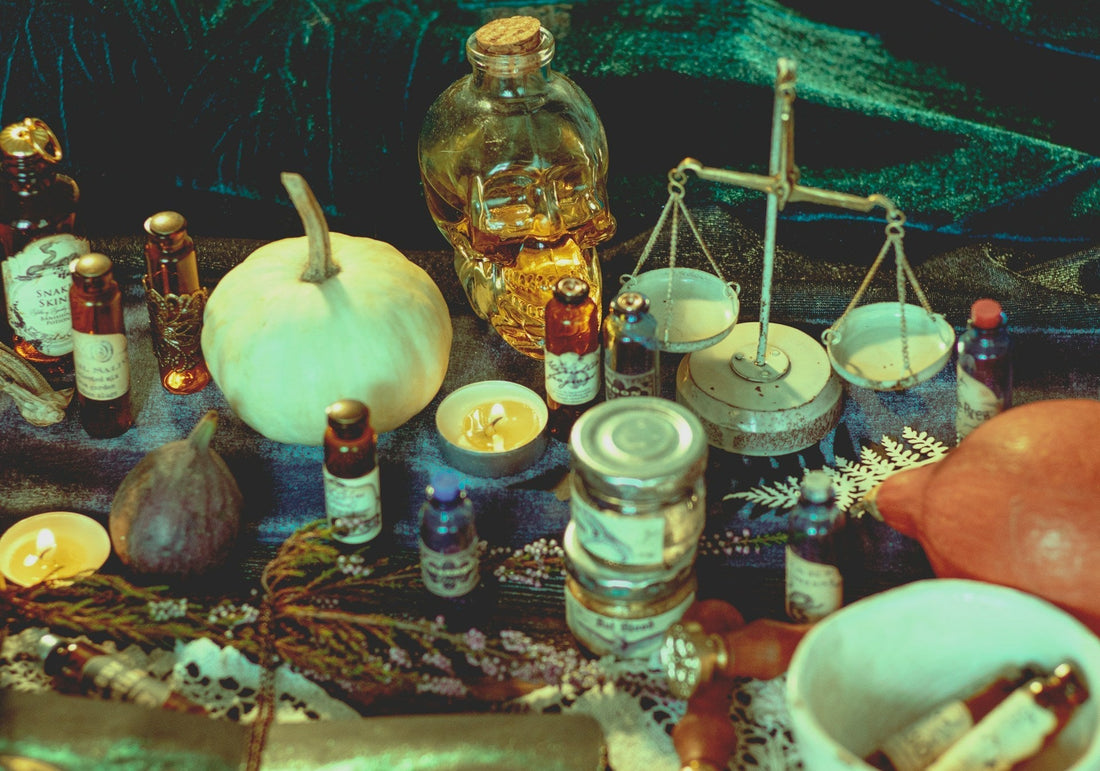
Modern medicine did not appear from nowhere. The drugs your doctor prescribes, the herbs you brew at home, and many of the principles guiding clinical practice today all carry traces of knowledge developed thousands of years ago, in Egypt, Greece, India, China, and across dozens of other healing traditions. That history is not just interesting background. It is directly relevant to anyone who uses plant-based remedies today, because understanding where this knowledge came from changes how seriously you take it.
We’ll trace how specific ancient medical traditions, from the earliest written pharmacopeias to classical Greek diagnostics to Ayurvedic and Chinese systems, shaped the treatments in use right now in modern apothecaries. Not every ancient practice survived, and not every one deserved to. But the thread connecting ancient healers to modern pharmacology is real, continuous, and ongoing.
What’s the History of Ancient Medicine?
Egypt: The First Written Pharmacopeia
The Ebers Papyrus, written around 1550 BCE, contains more than 700 medical prescriptions and remedies. It is one of the oldest surviving medical documents in the world, and reading an herbal remedy book like today is a striking experience: many of the plants it recommends are still in use.
Egyptian physicians documented castor oil as a laxative, aloe vera for skin conditions, and garlic as a treatment for infections. All three have modern evidence supporting their traditional uses. Garlic contains allicin, a compound with demonstrated antimicrobial properties studied in peer-reviewed journals including the Journal of Antimicrobial Chemotherapy. Honey, which the Ebers Papyrus recommended for wounds, turns out to produce hydrogen peroxide when it contacts tissue, explaining its antibacterial action. Hospitals now use medical-grade honey preparations for wound care under the name Medihoney.
The Egyptians also established something that matters more than any individual remedy: the idea of systematic medical recording. They created the concept of a pharmacopeia, a catalogue of treatments with dosing and application instructions. That concept sits at the foundation of pharmaceutical practice today.
Ancient Greece: What Survived and What We Left Behind
The Greek tradition produced two lasting contributions to medicine: a framework for observation-based diagnosis and the most influential plant catalogue in history.
Hippocrates, writing in the fifth century BCE, argued that disease arose from natural causes rather than divine punishment, and that careful observation of the patient was the physician's primary tool. That principle, diagnosis through systematic observation rather than assumption, is still the basis of clinical medicine. His insistence on diet and lifestyle as central to health also anticipates evidence-based public health guidance by two millennia.
The Greek physician Dioscorides produced De Materia Medica in the first century CE, a five-volume catalogue of roughly 600 medicinal plants. Physicians across Europe and the Middle East used this text as their primary pharmacological reference for more than 1,500 years. Many of the plants Dioscorides described, including valerian for sleep, fennel for digestion, and St. John's Wort for low mood, are still subjects of active research.
The Greek legacy also includes an honest cautionary example. Humoral theory, which attributed disease to imbalances among blood, phlegm, yellow bile, and black bile, dominated Western medicine for over a thousand years and produced treatments including bloodletting that caused genuine harm. Modern science discarded it entirely. The lesson is important: longevity of a medical tradition does not guarantee accuracy. What the Greeks got right in terms of observation and plant knowledge is worth preserving. What they got wrong in terms of underlying mechanism has been replaced.
Ayurvedic Medicine: A Living System With Modern Evidence
Ayurveda, the traditional medical system of the Indian subcontinent, developed over several thousand years into one of the most comprehensive plant-based healing frameworks in the world. Unlike the Greek tradition, Ayurveda has a continuous living practice, meaning its remedies have been refined through unbroken use rather than reconstructed from historical texts.
Several Ayurvedic plants now have solid clinical evidence behind them. Boswellia serrata, the resin of the Indian frankincense tree, has been the subject of multiple randomised controlled trials for osteoarthritis and inflammatory bowel conditions. A 2011 study in the International Journal of Medical Sciences found significant reductions in pain and improved function in knee osteoarthritis patients taking a proprietary Boswellia extract. Ashwagandha (Withania somnifera) has been studied in randomised trials showing meaningful reductions in cortisol and perceived stress. Turmeric's active compound curcumin has been investigated in hundreds of peer-reviewed studies for its anti-inflammatory mechanisms.
The Ayurvedic concept of prakriti, which classifies individuals by constitution type to guide personalised treatment, also anticipated a principle now gaining traction in modern medicine: that the same treatment may produce different results in different patients based on individual biological variation. Pharmacogenomics, the study of how genetics influences drug response, is essentially the scientific formalisation of an idea Ayurvedic physicians were working with centuries ago.
Traditional Chinese Medicine: Specific Modern Crossovers
Traditional Chinese medicine represents one of the longest continuously developed medical traditions in the world, with systematic texts dating to around 200 CE. Its influence on modern pharmacology is well documented, and our companion piece on how ancient remedies produced modern drugs covers the most striking example in detail: Tu Youyou's Nobel Prize-winning discovery of artemisinin from sweet wormwood, based on a fourth-century Chinese text.
A less widely known crossover involves berberine, an alkaloid found in several plants used in classical Chinese medicine, particularly Coptis chinensis. Multiple clinical trials have found that berberine reduces fasting blood sugar in people with type 2 diabetes at rates comparable to metformin, the most commonly prescribed diabetes medication globally. A meta-analysis published in Evidence-Based Complementary and Alternative Medicine concluded that berberine outperformed placebo in several glycaemic markers. Researchers are also investigating berberine for cholesterol management and cardiovascular effects.
Acupuncture, perhaps the most visible practice from Chinese medicine in Western clinical settings, has moved considerably closer to mainstream acceptance. The World Health Organization recognises acupuncture as an effective treatment for specific conditions, including chronic pain, chemotherapy-induced nausea, and postoperative discomfort. The National Institutes of Health and several major medical centres now include acupuncture in integrative pain programmes, a direct adoption of an ancient practice into contemporary clinical care.
How Ancient Medicine Became Modern Medicine
The pathway from traditional use to validated treatment follows a recognisable pattern across all of these traditions. Traditional healers observe that something works. That observation accumulates over generations, producing increasingly refined dosing and application knowledge. Modern researchers identify the observation, isolate the active mechanism, and test it against a control.
This process is ongoing. The WHO's 2019 Global Report on Traditional and Complementary Medicine noted that artificial intelligence is now accelerating this work: machine learning tools can scan thousands of historical medical texts and cross-reference them with databases of known plant compounds, identifying leads that no individual researcher could find in a lifetime. Several research universities are currently using this approach to identify new candidates for epilepsy, cancer, and Parkinson's disease treatment.
If you want a clear picture of how this compares to conventional pharmaceutical development, our guide to traditional medicine versus modern medicine walks through the key differences and how the two approaches increasingly complement each other.
What This History Means for Your Herbal Practice
Understanding this history gives you a more grounded relationship with the herbs you use. When you prepare ashwagandha or brew Lion's Mane tea, you are working with plants that have been refined through centuries of systematic observation. You are also working with substances that modern researchers take seriously enough to study in clinical trials. That combination matters.
It also provides an honest lens. Ancient traditions got things wrong alongside getting things right. The herbs that have earned a place in modern evidence-based practice are those whose traditional uses have been tested and validated. For a practical look at one area where this research is particularly active, our guide to herbs for nerve regeneration covers several plants with both traditional roots and meaningful clinical evidence.
The question worth asking about any herb is not just whether people have used it for centuries, but whether that use has held up when examined carefully. Our guide to whether herbal remedies are safe and effective provides a practical framework for evaluating the evidence behind individual plants, which is exactly the kind of critical literacy that makes an herbal practice worth trusting.
The information in this article is for educational purposes only and does not constitute medical advice. Herbal preparations can interact with prescription medications and may not be appropriate for all individuals. Please consult your healthcare provider before beginning any herbal regimen, particularly if you are managing an ongoing health condition or taking prescription medications.