
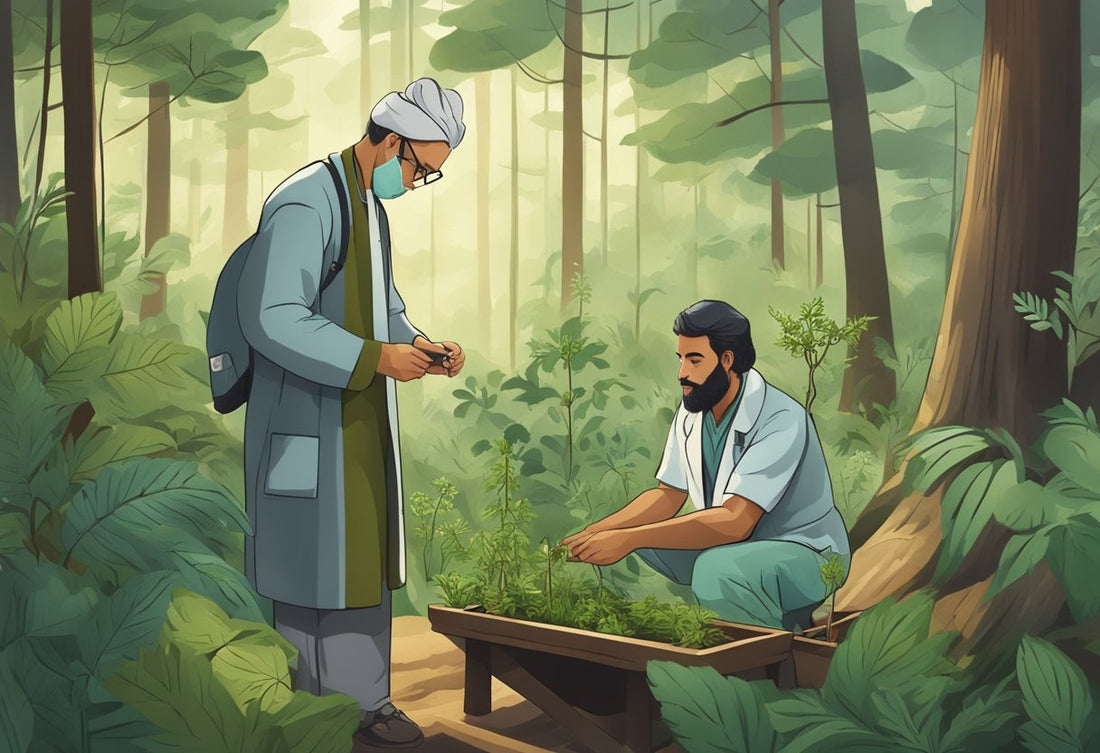
If you are over 50 and managing your health, there is a good chance you are already using both traditional and modern medicine, whether or not you think of it in those terms. You see your doctor for check-ups and prescriptions. You also take turmeric for your joints, drink chamomile before bed, or reach for elderberry when you feel a cold coming on. That combination is not contradictory. It is actually a quite sensible wellness practice, as long as you understand what each approach does well and where each one has limits.
The debate between traditional and modern medicine tends to get framed as a competition, with one side portrayed as science-backed and the other as folk wisdom.
That framing isn't helpful. A more practical question is: which system is the right tool for a given health situation? This guide answers that question with specifics, so you can make better decisions about your own care.
What Modern Medicine Does Best
Modern medicine, sometimes called conventional or allopathic medicine, developed over the past 200 years into the most powerful tool ever built for a specific set of problems. Understand what those problems are and you know exactly when to prioritise it.
Acute and emergency care is where modern medicine has no serious competition. If you break a bone, have a heart attack, develop a serious infection, or need a surgical intervention, modern medicine offers tools that did not exist a century ago and that no herbal preparation can replace. Antibiotics, surgical anaesthesia, cardiac stents, hip replacements: these are genuine achievements that have extended both the length and quality of life for millions of people.
Diagnosis is another area of clear strength. Modern imaging technology, blood panels, biopsies, and genetic testing allow clinicians to identify conditions with a precision that was simply impossible before the twentieth century. Catching a tumour early, identifying a hormonal imbalance, or detecting arterial narrowing before it triggers a heart attack requires the kind of biological specificity that modern diagnostic tools provide.
For conditions with a clear, single cause, such as a bacterial infection, a vitamin deficiency, or an autoimmune disease with an identifiable trigger, modern medicine's targeted pharmaceutical approach is highly effective. Drugs designed for a specific biological mechanism can produce rapid, measurable, repeatable results. The regulatory framework that governs drug approval, involving rigorous clinical trials and safety testing, also provides a level of assurance that is genuinely valuable.
What Traditional Medicine Does Best
Traditional medicine, which includes herbal medicine, Ayurveda, Traditional Chinese Medicine, and various other systems developed over centuries of practice, excels in different areas. Understanding those areas helps you use it more effectively.
Prevention and long-term lifestyle support are the traditional medicine sweet spot. Modern medicine is largely structured around treating disease once it has developed. Traditional medicine has historically focused on preventing imbalance before it becomes illness, using diet, plant-based preparations, movement, and stress management as its primary tools. For someone managing risk factors such as mild inflammation, elevated stress, or disrupted sleep, these approaches offer meaningful support with a gentler risk profile than pharmaceutical intervention.
Chronic conditions that are multifactorial and resistant to single-drug solutions are another area where traditional approaches often prove valuable. Conditions like chronic pain, fatigue, digestive dysfunction, and anxiety do not always have clean pharmaceutical solutions. The holistic framing of traditional medicine, which considers the patient's overall physical state, lifestyle, diet, and emotional wellbeing alongside specific symptoms, often identifies contributing factors that a brief clinical appointment might miss.
Traditional medicine also brings thousands of years of accumulated observation about how the body responds to plant compounds. Many of these observations are now validated by modern research. Our guide to how ancient medicine influences modern treatments traces this connection in detail, from Egyptian wound care to Ayurvedic joint remedies. That depth of observation matters because it points researchers and practitioners toward plants that have already demonstrated meaningful effects in human populations across generations.
There are Limitations of Both Systems
A fair comparison requires acknowledging where each system falls short.
Modern Medicine Treats Symptoms Instead of Root Causes
Modern medicine has a well-documented tendency to treat symptoms rather than causes in chronic disease management. The standard response to chronic pain is often pharmaceutical pain management, which addresses suffering but does not necessarily address what is producing the pain. Fragmented specialist care can mean that no single clinician holds the whole picture of a patient's health. There is also the matter of cost: modern pharmaceutical treatments are expensive, and access is uneven.
Herbal Remedies Can’t Solve Everything, and Research is Limited in Areas
Traditional medicine carries its own limitations, and it is important to be clear-eyed about them. Not every traditional remedy has been validated by controlled research. Some have been studied extensively and perform well under scrutiny. Others have a long history of use but limited modern evidence behind them. A handful have turned out to cause harm when used incorrectly, at high doses, or in combination with pharmaceutical medications. The lack of standardised preparation and quality control in herbal supplements also introduces variability that clinical trials do not have to contend with.
Our guide to whether herbal remedies are safe and effective addresses this directly, providing a practical framework for evaluating the evidence behind specific herbs before incorporating them into your routine. That kind of critical evaluation is exactly what distinguishes informed herbal practice from wishful thinking.
The Integrative Approach: Using Modern & Ancient Medicine Wisely, Together
The most effective approach for most people, particularly those managing chronic conditions or looking to maintain health into their later decades, draws deliberately on both systems. Integrative medicine is the formal name for this framework, and it is now practiced in major medical institutions including the Mayo Clinic, Johns Hopkins, and Memorial Sloan Kettering.
The practical principle is straightforward: use modern medicine for what it does best (acute care, diagnosis, and pharmaceutical management of conditions that clearly require it), and use traditional approaches for what they do best (prevention, lifestyle support, and adjunct management of chronic symptoms). The key word in that sentence is deliberately. Integrative care is not about doing both things at random. It is about making conscious, informed decisions about which tool fits which situation.
Communication with your healthcare provider is essential in this approach. Many physicians, particularly those in integrative or functional medicine practices, are increasingly familiar with and receptive to herbal medicine. Telling your doctor which herbs you use regularly matters because some plant compounds interact with pharmaceutical drugs. St. John's Wort, for instance, interacts with a wide range of medications including anticoagulants and certain antidepressants. That interaction is well documented and is the kind of information your doctor needs to advise you safely.
The convergence of traditional and modern medicine is also producing direct pharmacological results. A significant number of modern drugs originated from plant compounds identified through traditional use, and research in this area continues actively. Our article on how ancient remedies are changing modern medicine covers several of the most significant examples, including Nobel Prize-winning drug discoveries rooted in traditional botanical knowledge.
A Practical Example: How to Manage Chronic Pain Using Both Ancient & Modern Medicine
Chronic pain is one of the most common health concerns among adults over 50, and it illustrates the integrative framework well. Modern medicine offers pharmaceutical options including NSAIDs, opioids, and nerve medications, each with meaningful side effect profiles for long-term use. It also offers interventional procedures such as cortisone injections and nerve blocks.
Traditional medicine offers a different toolkit. Anti-inflammatory plant compounds such as turmeric's curcumin, Boswellia, and ginger have clinical evidence supporting their use in osteoarthritis and general inflammatory pain management. These approaches work differently from NSAIDs and carry a different (and often more favourable) side effect profile for most people. Acupuncture has been endorsed by the World Health Organization for specific chronic pain conditions. Dietary adjustments that reduce systemic inflammation work at a foundational level that pharmaceuticals do not address.
Using both approaches together, under the guidance of a clinician who is comfortable with both, often produces better results than either alone. Our guide to natural remedies for chronic pain covers specific plant-based options with the research behind each one, giving you a starting point for an evidence-informed conversation with your provider.
Building the Knowledge to Navigate Both Systems
The greatest advantage you can give yourself in navigating traditional and modern medicine is knowledge, not loyalty to one camp or the other. Understanding what chamomile actually does in the body, why turmeric works better with black pepper, which herbs carry known drug interactions, and which traditional preparations have solid research behind them: this is the information that makes herbal medicine safe and effective as a complement to modern care.
That level of understanding does not come from a quick internet search. It comes from building a genuine working knowledge of plant medicine, its mechanisms, its preparation, and its appropriate use. The traditional healers who developed these systems over centuries were not guessing. They were observing carefully, testing, refining, and passing down what worked. A good herbal medicine book brings that accumulated knowledge together with the lens of modern evidence, giving you a trustworthy guide rather than a collection of unverified claims.
The combination of traditional plant wisdom and modern scientific understanding is not a contradiction. It is the most thoughtful approach to health available to you right now.
The information in this article is for educational purposes only and does not constitute medical advice. Herbal preparations can interact with prescription medications and may not be appropriate for all individuals. Please consult your healthcare provider before beginning any herbal regimen, particularly if you are managing an ongoing health condition or taking prescription medications.